Fire Glass
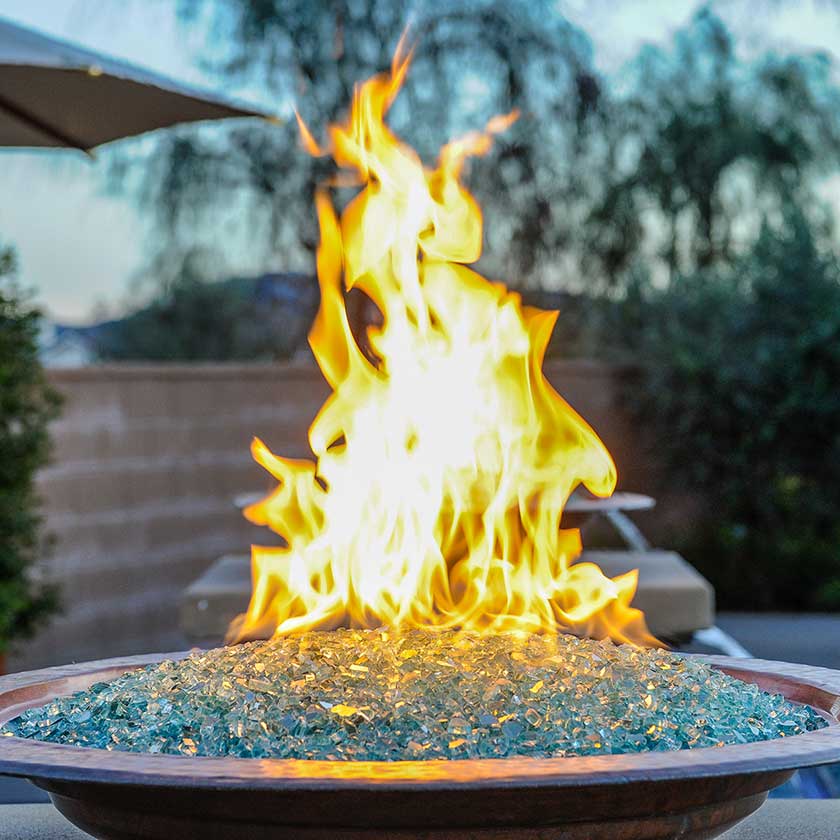
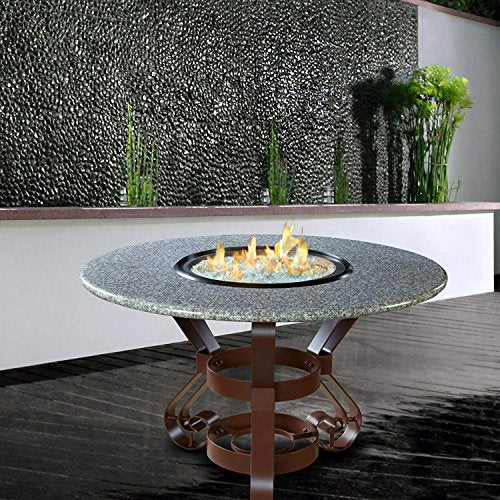
Fire glass is tempered, heat-resistant glass designed to replace lava rock or ceramic logs as the burning media in gas fire pits and fireplaces. It doesn't burn or melt — it diffuses the flame, reflects the light, and gives your fire feature a clean, modern look that lava rock can't match. A 30-pound bag of premium fire glass typically lasts a decade or longer with normal use.
This collection covers every common configuration. Reflective fire glass has a mirrored coating on the back of each piece that bounces flame light upward and outward — the brightest, most dramatic option. Non-reflective fire glass is solid color throughout with a tumbled finish; quieter visually and usually a bit less expensive. Both come in 1/4-inch and 1/2-inch sizes. 1/4-inch fills more uniformly and is the standard for most residential pits. 1/2-inch creates a chunkier, more textural look that works well in larger installations.
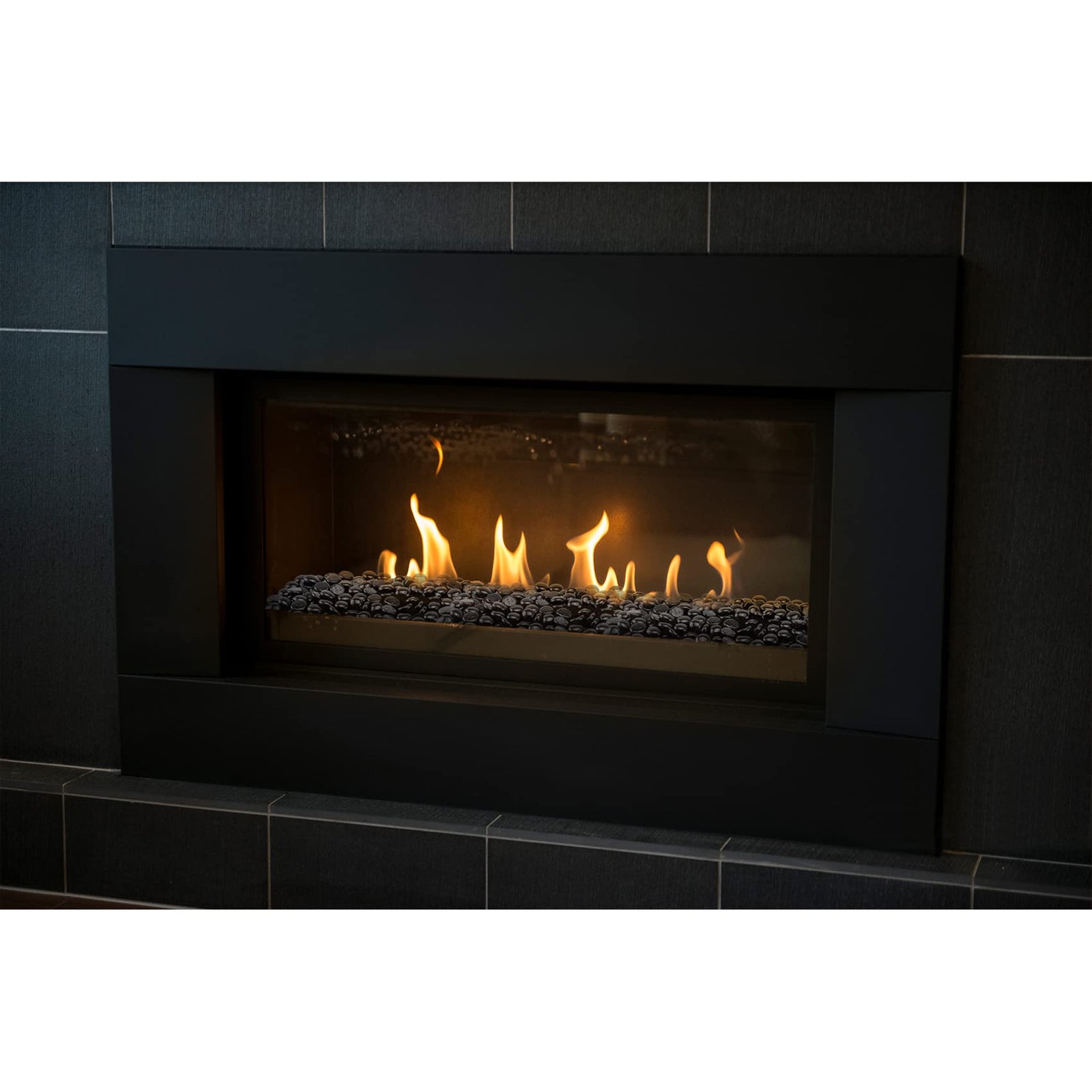
We also stock pre-mixed blends (color combinations curated by American Fireglass), fire beads (smooth, round shapes that look like polished river stones), and Zircon — a premium high-clarity glass for designers and high-end installations.
All fire glass sold here is tempered and rated for direct flame contact in both propane and natural-gas systems. Need help calculating quantity?



Sale



Sale
FAQ's
-
A general rule: a 2-inch-deep layer covers the burner properly. For a round fire pit, multiply the radius² × 3.14 × 2 (depth in inches), then convert cubic inches to pounds at roughly 10 cubic inches per pound of 1/4" glass. Most 24-inch fire pits need 30–40 pounds; 36-inch pits need 60–80 pounds. Every product page lists recommended coverage.
-
Most DIY installs take a single weekend (8–16 hours of work) for kits up to 16 feet. Larger streams or rocky soil can stretch installation to 2–3 weekends. The mechanical install is fast; arranging the rock and gravel naturalistically is what takes the most time.
-
In most U.S. municipalities, no — because there's no standing water deep enough to require pool fencing or pond permitting. Check your local code anyway, especially if you're running electrical for the pump or lighting. GFCI outdoor circuits are required by NEC code.
-
Pump size is determined by stream length and waterfall height. As a general rule, you need roughly 100 gallons per hour (GPH) for every inch of spillway width, plus extra capacity for vertical lift. Every kit we sell ships with a pump pre-sized for the stream length — no calculations needed on your end.
-
Yes. Because water disappears into a gravel-covered basin rather than collecting in an open pool, pondless waterfalls eliminate the drowning risk that comes with traditional ponds. The AquaBlox-style support matrix beneath the gravel is rated to hold the weight of an adult, so kids and pets can step on the feature safely.
-
Not directly — the basin holds too little water and is filled with gravel. However, you can convert a pondless waterfall into a traditional pond by excavating an upstream or downstream pool, adding a skimmer and biological filter, and connecting it to the existing waterfall plumbing. Many of our customers start pondless and expand later.
-
In freeze-prone climates, remove the pump in late fall, drain the lines, and store the pump submerged in a bucket of water in a heated space (not dry — pump seals can crack). The basin and spillway can stay in place year-round. In spring, reinstall the pump, top off the water, and you're running again in 15 minutes.
About Fire Glass