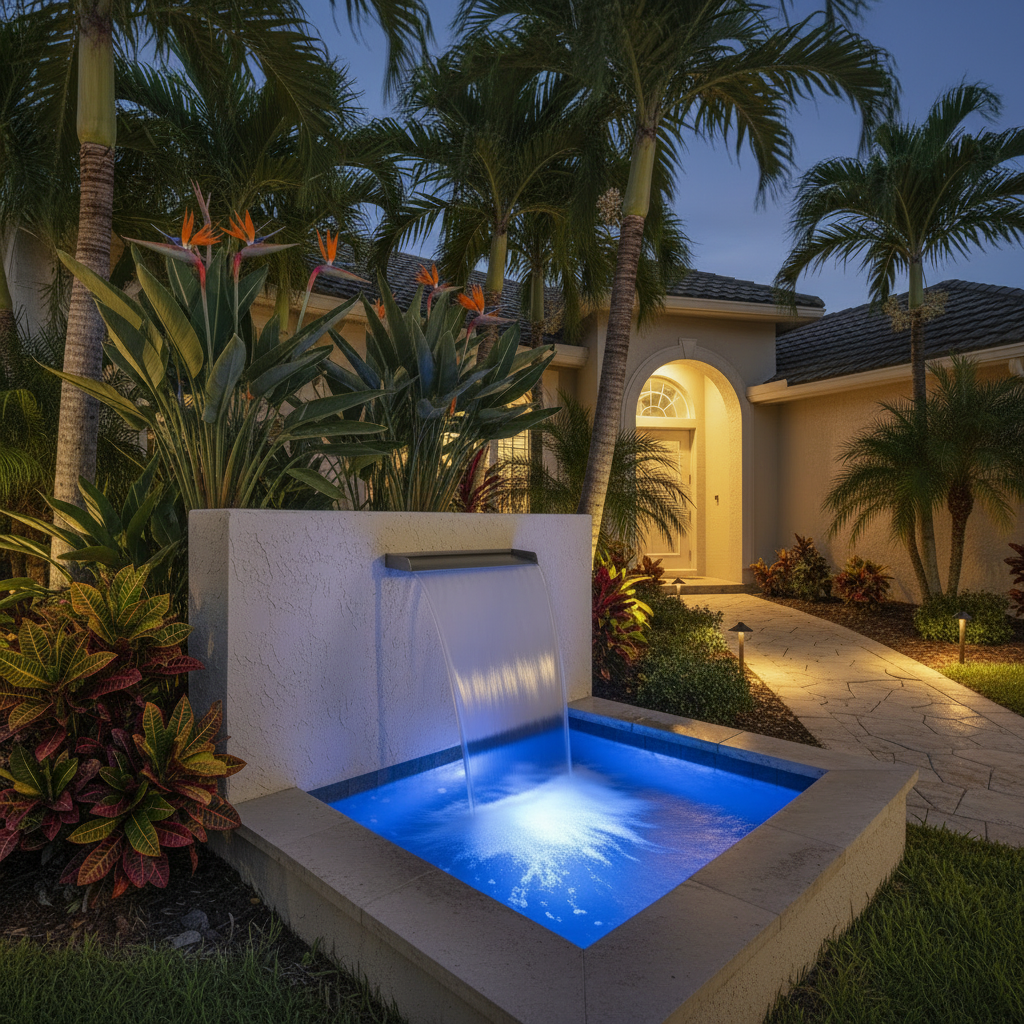
Formal Spillways
A formal spillway is the contemporary alternative to a naturalistic rock waterfall — a clean, architectural water emitter typically mounted on a wall, raised planter, or inside a custom-built basin. Where a pondless waterfall mimics a mountain stream, a formal spillway creates an intentional, designed effect: a sheet of water falling over a stainless edge, a scupper jetting from a stone wall, an illuminated weir lighting up at dusk.
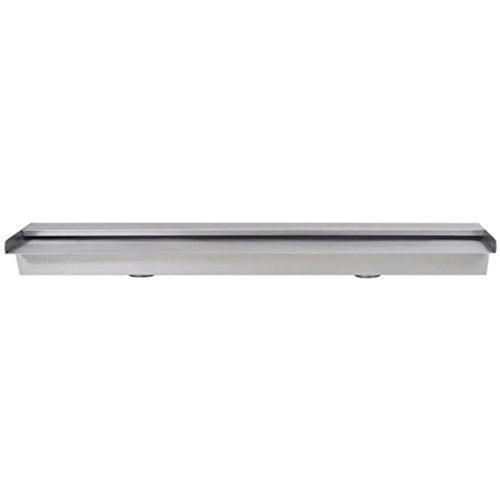
This collection covers every common style. Sheet spillways emit a clean, glass-like curtain of water — ideal for modern landscapes and architectural pools. Scupper spouts project water outward from a wall in a controlled arc — the classic Mediterranean courtyard look. Wall spouts mount flush to a vertical surface and produce a quieter trickle suitable for entryways and patio walls. Waterfall weirs combine width and drop for a more dramatic display, sometimes with integrated LED lighting (Atlantic ColorFalls is the category leader).
Most spillways here are stainless steel — the right material for water contact, since it won't corrode, stain, or leach minerals. Copper spillways are an alternative for traditional or rustic settings, where the developing patina is part of the design intent.
You'll also find basin kits (the hidden reservoir that catches and recirculates the water), basins sized to specific spillway widths, and spillway accessories including LED lighting, flow valves, and mounting hardware. Build a complete formal water feature from these components, or pair a spillway with an existing pondless setup.
Not sure how to design around a formal spillway? Browse our Formal Spillway Design Inspiration Guide for installation photos and configurations.




Sold Out



Sold Out



Sale


Sold Out
FAQ's
-
A spillway is the general term for any water-emitting component. A scupper projects water outward from a vertical surface in a controlled stream — like a fountain mouth. A weir is a horizontal edge over which water falls in a sheet, typically wider than a scupper. In practice, manufacturers use these terms loosely; what matters is the visual effect (sheet vs jet vs trickle) and the mounting style (wall vs basin-mounted).
-
Yes — wall-mounted spillways are designed for installation on stone, stucco, concrete block, or brick walls. Stainless mounting brackets are usually included or available as add-ons. You'll need to drill through the wall to run water tubing from the basin below (or feed the line up through a hollow wall cavity).
-
Yes. The spillway is the emitter; the basin is the reservoir that catches the falling water and houses the pump. For a complete feature, buy a matched basin kit sized for your spillway width and flow rate, or use one of our pre-configured spillway + basin bundles.
-
A general rule: the spillway width should be roughly 1/3 to 1/2 the visible width of the wall or backdrop it's mounted on. A 12-inch spillway on a 36-inch wall looks proportional; a 24-inch spillway on the same wall feels overwhelming. For freestanding installations, the spillway width should match the basin width within an inch or two
-
Most stainless spillways have a flat upper surface that accepts strip LED lighting underneath the water exit. Atlantic's ColorFalls line includes integrated programmable LEDs from the factory. For other spillways, we sell snap-on LED bars sized for common widths.
-
Quieter than a naturalistic rock waterfall, generally. Sheet-flow spillways produce a soft, even hiss; scupper spouts produce a more focused splash that's louder per unit of flow. Most spillways are tuned to specific flow rates by the included pump — you can dial up or down with the pump's flow valve for the volume you want.
-
Yes, the same way any outdoor water feature does. In freezing climates, drain the basin and tubing in late fall, remove the pump, and store it submerged in a bucket of water indoors. Stainless and copper spillways themselves are unaffected by freezing temperatures; only standing water in the basin and lines is the concern.
About Formal Spilways